
UT Health Sciences Pharmacists Save Lives When Every Second Counts
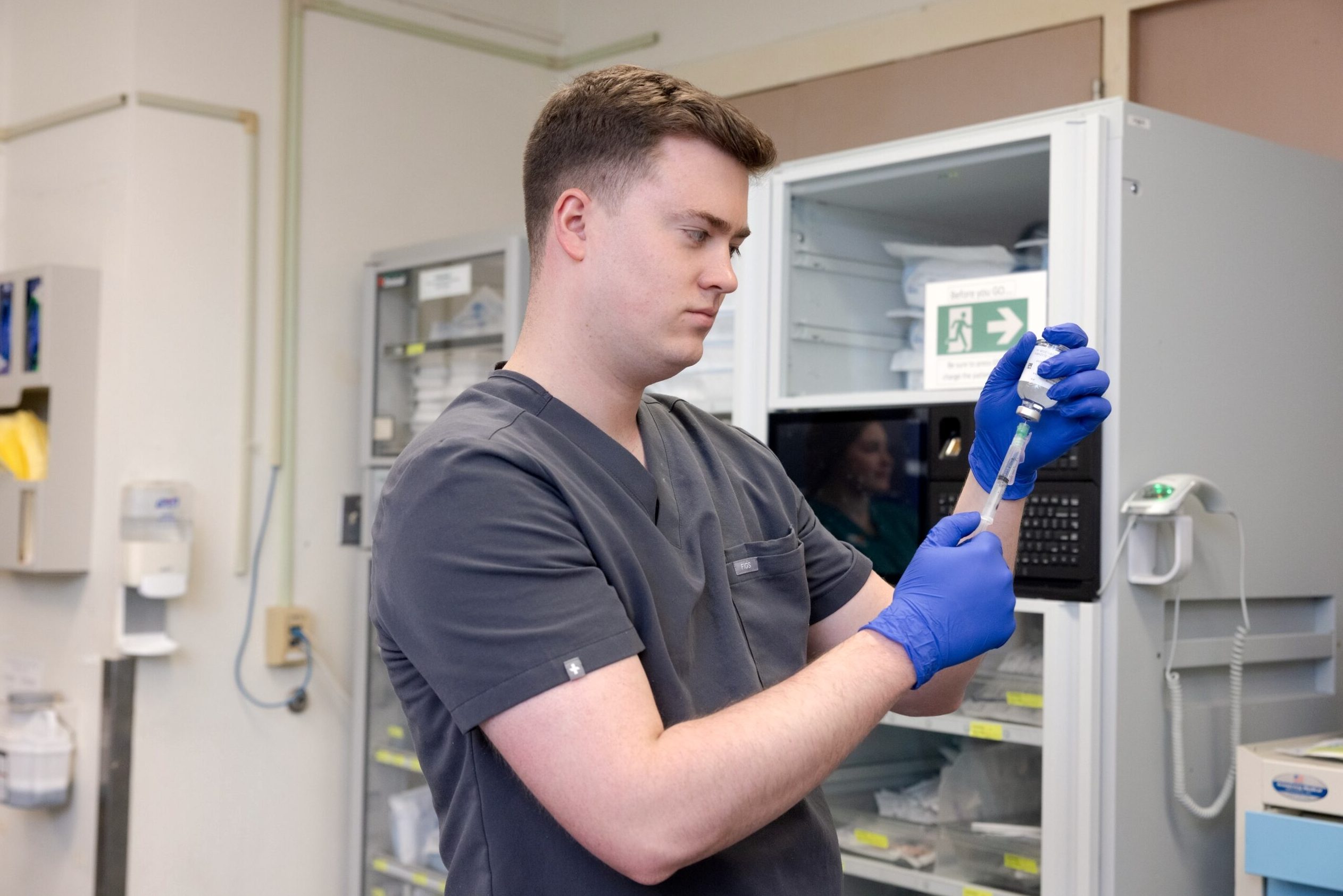
Seconds can mean the difference between life and death in the emergency room. As the trauma bay erupts into motion, emergency medical services (EMS) rushes through the doors, nurses scramble to assist, and physicians rapidly assess a patient who may be unconscious, unstable, or unidentified. Alongside these clinicians stands another vital team member: the emergency department pharmacist.
Before the first medication is administered, the pharmacist has already reviewed EMS information, prepared lifesaving medications, and anticipated the next interventions.
Across Tennessee, it’s likely a pharmacist trained by the University of Tennessee Health Sciences College of Pharmacy is the one standing alongside emergency teams. With a statewide rotation network, faculty embedded in major trauma centers, and emergency medicine coursework, UT Health Sciences’ role is clear. It trains the pharmacists emergency departments depend on when lives are at stake.
Misconceptions and Reality
In popular culture, medical dramas like ER or The Pitt often overlook pharmacists or depict them simply handing out medications from a distant corner of the hospital. In emergency care, their role is anything but background. They act proactively, are fully integrated, and are critical to patient care.
“People think pharmacists are downstairs in the basement verifying orders. That’s not true in the ED at all,” said Katharyn Walker, PharmD, an alumna now practicing emergency medicine pharmacist at Methodist University Hospital, Baptist East, and Le Bonheur Children’s Hospital.
As an ED pharmacist, Dr. Walker works right at the bedside with the emergency team. She suggests and advises on medications, helps with dosing, and gets drugs ready for quick use during emergencies. Her specialized skills are especially valuable in the fast-moving ER.
“While nurses and doctors handle many hands-on responsibilities with the patient, having a pharmacist on the emergency team significantly enhances safety, speed, and effectiveness,” Dr. Walker said. “Our expertise in medication management and dosing relieves pressure on the team and makes a critical difference.”
This impact is supported by data. Research shows having a pharmacist on the emergency team reduces adverse drug events by 74% and lowers mortality by 22%. It also results in shorter intensive care unit stays and a 25-to-1 return on investment.
“I love our pharmacists. I absolutely could not do my job without them,” said Chantay Smart, MD, an emergency physician at Regional One Health and a UT Health Sciences College of Medicine alumna. She notes that, in addition to their duties, pharmacists help educate patients, train nurses on critical medications, and ensure medications are used safely, thereby alleviating pressure and limiting medication errors when a pharmacist isn’t present.
Navigating the Fog of War
Regional One Health in Memphis is a Level 1 trauma center that treats some of the most serious injuries in the Mid-South. Justin Griner, PharmD, a UT Health Sciences graduate and director of the emergency medicine PGY-2 residency, says emergency pharmacists must make quick, informed decisions even when there’s little time and much uncertainty.
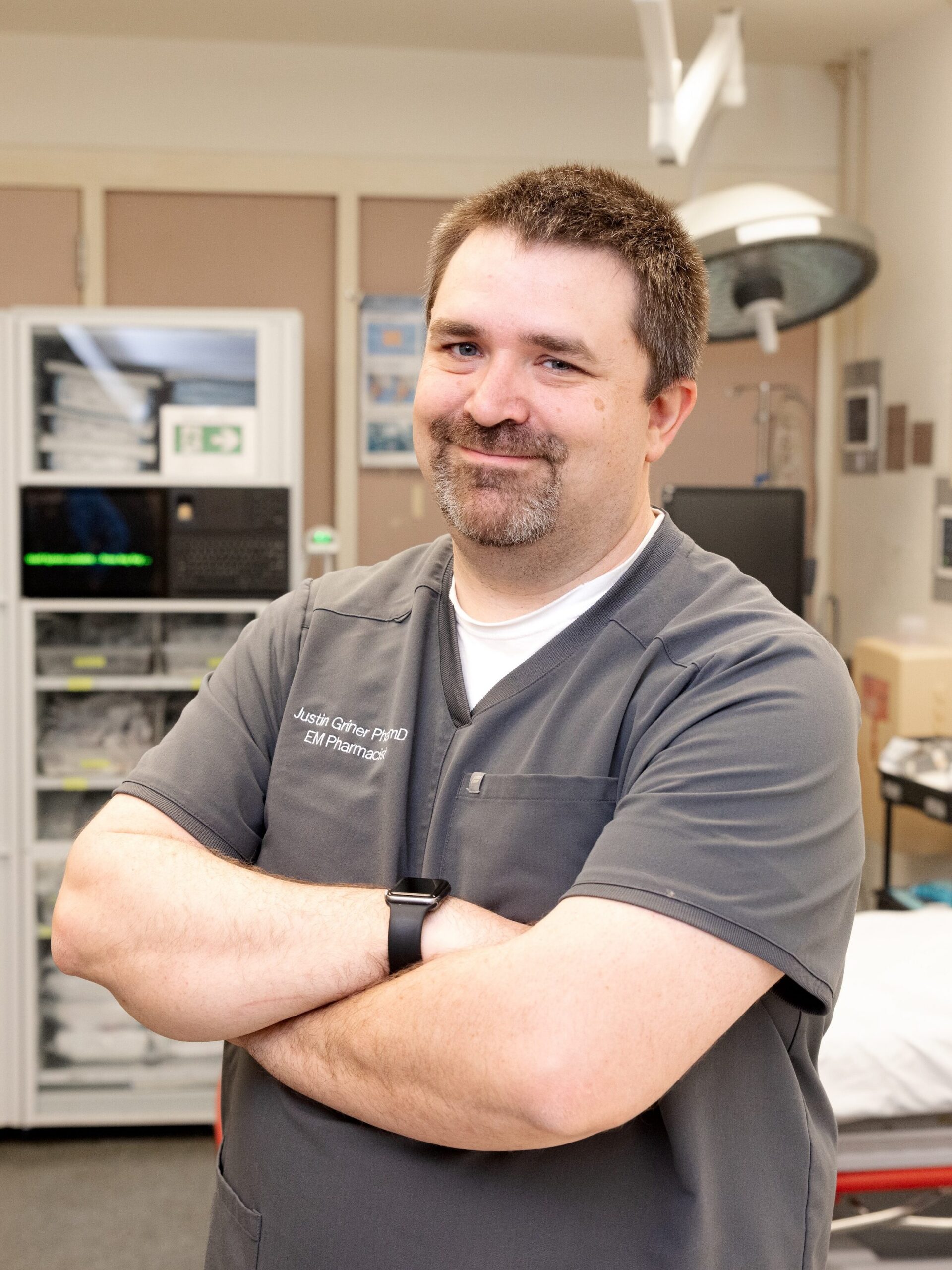
“There’s often a kind of fog of war,” Dr. Griner explained. “We gather information and try to synthesize the pieces of the puzzle available to us at that moment.”
Pharmacists often must decide on medication-related issues in a short time, sometimes without all the information they need. Their ability to investigate and use their expertise is invaluable at these moments.
Dr. Griner recalled a past trauma case. A patient arrived unconscious; records showed the patient was prescribed blood thinners, and the team prepared to administer a costly and potentially dangerous reversal agent to give the appropriate care.
But something didn’t sit right with Dr. Griner and his ED pharmacy resident. They weren’t convinced the patient had taken his blood thinner recently. If they were right, the reversal could cause blood clotting and new complications. They quickly went into investigation mode. Finally, they spoke to someone close to the patient who knew the answer, confirming the patient hadn’t taken the medication for over a week. The reversal agent wasn’t given.
“Taking ownership of medication-related issues is how we contribute to the team,” Dr. Griner said. By digging deeper, the pharmacists were able to confirm critical medication history and collaborate with the team to ensure the safest course of treatment.
Such decisive action is echoed in ERs across Tennessee. In Knoxville, UT Health Sciences alumnus Patrick Blankenship, PharmD, practices as an ED pharmacist at Prisma Health Blount Memorial Hospital and teaches UT Health Sciences pharmacy students on rotation, many from the College of Pharmacy’s Knoxville campus. One case early in his career has stayed with him.
A farmer arrived confused, immobile, and deteriorating quickly after collapsing while working in a grain silo. The team suspected a neurological disorder, which was confirmed with the presence of a small brain tumor, and prepared a transfer to a facility with a neurosurgery team. Dr. Blankenship, however, recognized subtle signs of organophosphate poisoning, a toxic exposure linked to pesticides, symptoms he learned to spot as a UT Health Sciences student.
Trusting his training, he urged the team to give an antidote before transport. The next day, the neurologist on call at his hospital called him, saying, “I don’t know what you did, but by the time he got here, he was better.”
Dr. Blankenship’s intervention helped stabilize the patient, demonstrated the value of pharmacologic insight at the bedside, and reinforced to students the importance of timely medication decisions. As he often reminds students, “Most medication errors occur in the administration phase, which tells you where we need to be: at the bedside.”
Training ER-Ready Pharmacists Tennesseans Depend On
Stories like these showcase the influence of UT Health Sciences-trained pharmacists throughout Tennessee, providing patients with expertise, vigilance, and collaboration when it matters most.
With campuses in Memphis, Nashville, and Knoxville, the College of Pharmacy offers 14 emergency pharmacy rotation sites across the state, including in Memphis, Nashville, Knoxville, and Chattanooga. This statewide network provides students with unmatched clinical opportunities. The faculty’s clinical expertise, along with the college’s emergency medicine elective, acute care training, and simulation labs, prepare students for the ED’s pace and pressure. UT Health Sciences’ legacy of excellence affirms its status as Tennessee’s top training destination for healthcare workers.
“If we’re doing our job right, no one notices, but the patient survives.”
Dr. Patrick Blankenship
Fourth-year student Kandace Pointer, who plans to pursue a career in ED pharmacy after a rotation in the emergency department at Methodist University Hospital, described first witnessing ED pharmacists in action. “The pharmacists are truly integrated,” she said. “They are always two steps ahead. You never know what’s coming through the door, but they’re ready for it. People don’t realize how much they’re doing.”
Nashville student Max Lane, who recently matched to a PGY-1 (post-graduate year one) residency at Ascension Saint Thomas Rutherford, echoes the sentiment. “UT Health Sciences prepared me to step into the chaos of the ED and contribute from day one,” he said.
The university also consistently places more graduates in PGY-1 and PGY-2 residencies than any other college in the state, ranking No. 14 nationally. These post-graduate appointments are a key step for pharmacists pursuing an emergency medicine specialization.
For Auston Phillips, PharmD, a 2023 graduate now completing his emergency medicine PGY-2 at Regional One Health, the fundamental knowledge and confidence instilled through his PharmD training are priceless. “UT Health Sciences gave me the foundation. Residency taught me to trust it,” Dr. Phillips said.
Ready for the Next Call
People may not always see emergency department pharmacists at work, but upon looking more closely, their impact is clear. Every day in Tennessee, they prevent medication mistakes, provide advanced medication expertise to help make important decisions, teach other team members, and ultimately save lives.
“If we’re doing our job right, no one notices, but the patient survives,” Dr. Blankenship said.
Whenever a new trauma case arrives, a UT Health Sciences-trained emergency pharmacist is there, ready to assist the emergency team in saving a life. This underscores the profound impact of UT Health Sciences’ statewide reach in producing the most prepared health care workers exactly where Tennesseans need them.
What ER Pharmacists Do
At the Bedside, In Real Time
Anticipate emergencies – Prepare medications before they are ordered
Prepare life-saving drugs – For conditions including stroke, trauma, intubation, and cardiac arrest
Ensure accurate dosing – For trauma, pediatrics, kidney injury, and more
Prevent medication errors – Catch interactions, duplications, and contraindications
Manage high-risk medications – Anticoagulants, paralytics, sedatives, vasopressors, and more
Synthesize incomplete information – EMS reports, vitals, labs, and home medical histories
Respond to toxicology emergencies – Antidotes, poisonings, and overdoses
Support the care team – Free physicians and nurses to focus on procedures
Educate nurses and providers – Medication use, safety, and administration