
How UT Health Sciences Helped Me Find Purpose in the Lab
Growing up, my mom always told me, “To have a career that you feel lasting fulfillment from, you need to pursue what breaks your heart.” That idea ultimately guided me to cancer research.
As a child, I was fascinated by science and always knew I wanted to be a scientist. As a biology major at Christian Brothers University, I explored a wide range of scientific careers to identify my niche. I worked as an analytical microbiology laboratory technician, shadowed physicians, and even worked at the Memphis Zoo as I sought to discover where my passions lie.
With the help of my undergraduate advisor, I found a position as a student research technician at St. Jude Children’s Research Hospital. This was where I found my passion for cancer research, and since then, my “why” has been clear. My life’s purpose is to work hard behind the scenes in the pursuit of science to advance our knowledge of cancer progression and improved treatments for patients and their loved ones.
When it came time to choose a graduate program to pursue my PhD, the decision was easy. The Cancer and Developmental Biology track in the College of Graduate Health Sciences’ Biomedical Sciences Program offered the ideal combination of course structure, rotation opportunities, and emphasis on student development and mentorship. It also helped that my husband, Nicholson, was already a student in the College of Pharmacy, giving me an early appreciation for the quality of education and making the transition seamless.
From the start of graduate school, UT Health Sciences has been in my corner. My husband and I are proud alumni, and we both attribute our careers to the education and opportunities we found here. My training prepared me for a productive, creative, and competitive career in cancer research.
During graduate school in the lab of Associate Professor Susan Miranda, PhD, the College of Graduate Health Sciences and UT Foundation supported me through the Alma and Hal Reagan Endowment Fellowship, travel awards, meeting invitations, competition and speaking opportunities, and an independent idea grant. These experiences helped pave the way to my current position on the UT Health Sciences faculty.
As I explored postdoctoral opportunities, Gabor Tigyi, MD, PhD, Harriet Van Vleet Endowed Professor in Basic Oncology, and Professor Junming Yue, PhD, recruited me to join their team as an assistant professor in the College of Medicine’s Department of Pathology and Laboratory Medicine. Supported by the UT-Oak Ridge Innovation Institute’s Development and Advancement of Radiopharmaceutical Therapies Convergent Research Initiative, this position allowed me to transition straight into the role of principal investigator, leading a research lab, mentoring graduate students, and spending every day in the fight to develop innovative and effective therapies for cancer patients.
I truly believe every experience is what you make of it, and my advice to young researchers is simple: just go for it. If you think you might be interested in a research career, find a lab and try it. And when imposter syndrome inevitably appears, remind yourself that you’ve earned your place.
I am deeply thankful to my mentors, my support system, and my university. With the continued support of UT Health Sciences, my lab and I are working hard to better understand cancer stem cell signaling pathways, with special emphasis on oncofetal proteins, to identify new targets for radiotherapies. We are excited to see how our efforts will unfold to contribute to cancer research and make a lasting impact in the field.
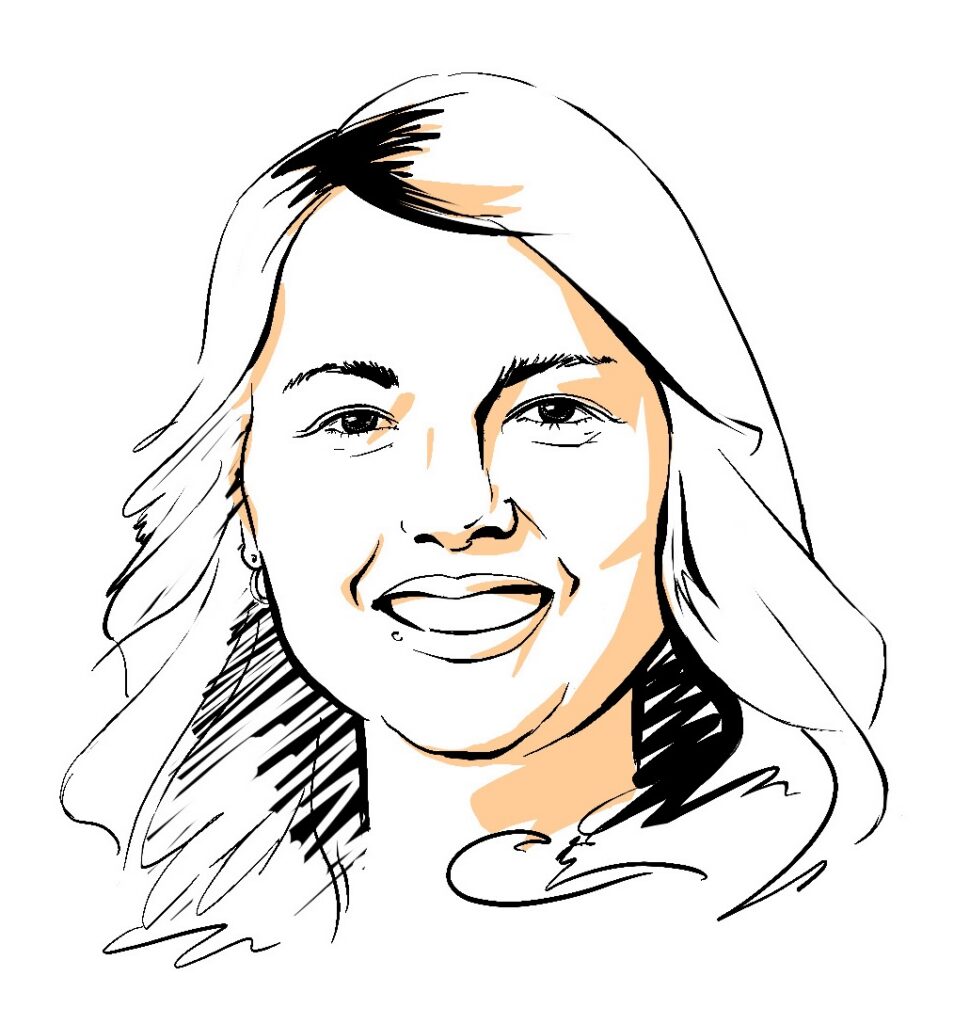
Rachel Perkins, PhD, is a 2024 graduate of the College of Graduate Health Sciences. She joined the College of Medicine faculty just months after earning her PhD. Dr. Perkins is passionate about advancing cancer stem-like cell biology and mentoring students. Her goal is to create learning environments that encourage innovation and independent thinking to promote the future of scientific research. Illustration by Jason Zhang.