
There is a version of the artificial intelligence story that everyone has heard by now: the billion-dollar campuses, the coastal cities competing for the next great tech company. Memphis, Tennessee, does not fit that story. And that, it turns out, may be precisely the point.
The University of Tennessee Health Sciences’ achievement of R1 research status in 2025, the highest Carnegie classification for research universities, placed Memphis in the company of only nine U.S. metropolitan areas that are home to two top-tier research institutions. That distinction has quietly changed the city’s conversation with the technology industry. When AI companies and investment groups evaluate sites, they are increasingly looking for academic partners capable of doing something with the infrastructure they build. Memphis can make that case.
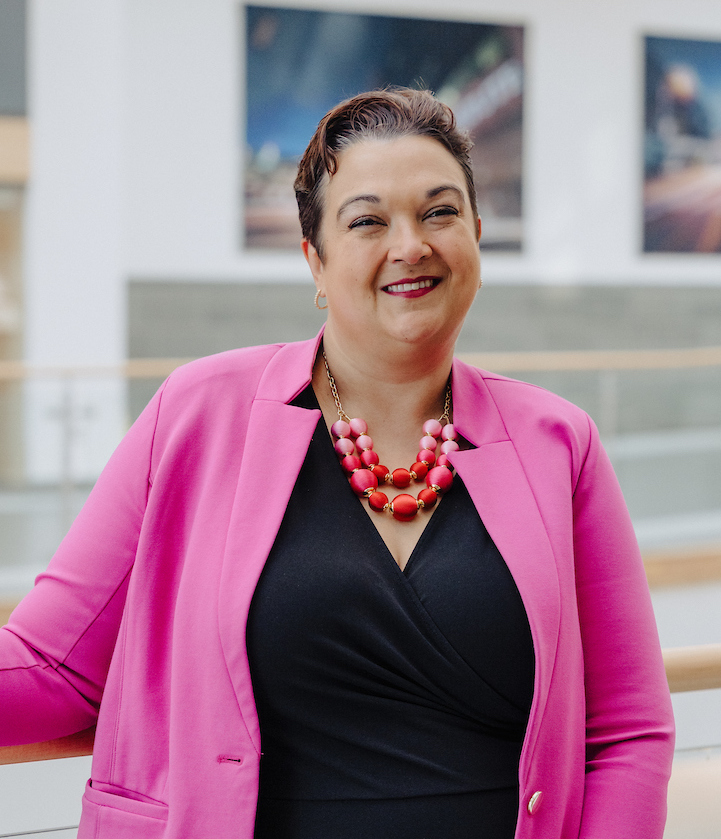
“Groups are intentionally looking at Memphis because it has two R1 universities,” says Jessica Snowden, MD, vice chancellor for research at UT Health Sciences. “They want to partner with academic groups to come up with cutting-edge use cases for AI, new ways to approach how we do AI.”
The regional momentum is real. AI company xAI moved into the city. Google began building a major data facility across the river in Arkansas. Investment groups have explored constructing multi-use facilities here anchored by data center access. Troy Parkes, SVP of Global Business Development for the Memphis Chamber of Commerce, who led the effort to recruit xAI and continues to drive AI company development for the region, describes a city whose underlying assets, such as extensive fiber infrastructure, competitive land, and business-friendly environment, are finally getting the attention they deserve. “xAI has put us on the map in terms of what we did and how we did it,” he says. “Now we’re getting great calls from other companies. It’s a moment for Memphis.”
For Dr. Snowden, the outside attention has illuminated something equally important: the depth of AI work already happening on her own campus. “My favorite thing about all of this,” she says, “was learning what our researchers are already doing in this space. It has a lot of fingerprints across our campus.”
Already at Work: AI Inside Memphis Medicine
Before any new data centers are built or consortia finalized, artificial intelligence is already reshaping research and patient care at UT Health Sciences in ways that are as practical as they are consequential. They also stand to improve the health of people across Tennessee and beyond.
In the Department of Genetics, Genomics, and Informatics, researchers are using large language models as well as agents and code of their own design to analyze genomic and healthcare datasets at a scale hard to imagine even four years ago. They are often hunting for causes of human disease and aging, and more individualized diagnostics that might enable earlier treatment. Work that once required years can now unfold in weeks.
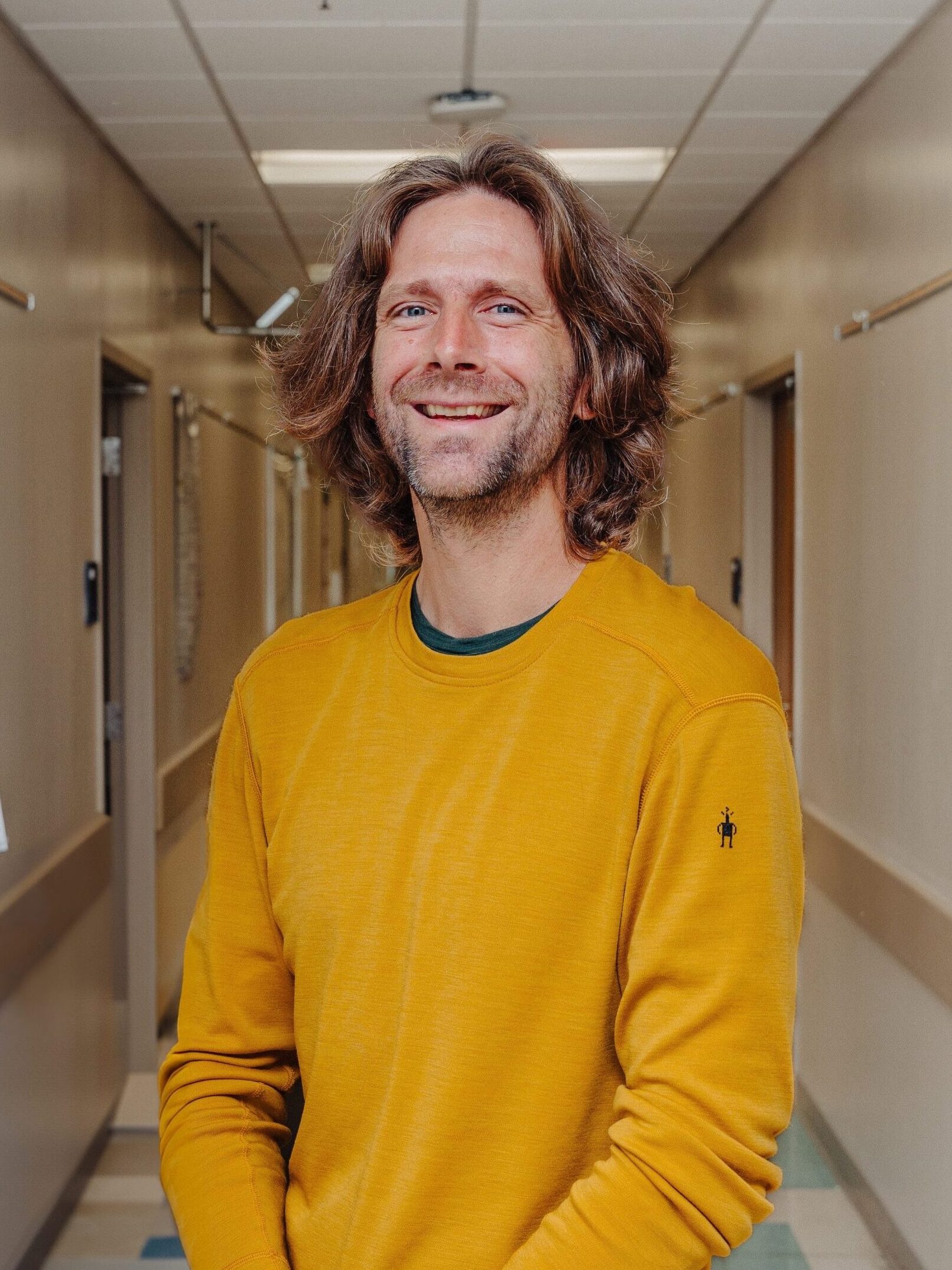
The implications reach beyond the lab bench and into the classroom. Erik Garrison, PhD, whose work in the department has used AI extensively in recent research on the human pangenome, describes a fundamental shift in how the next generation of scientists is being trained. The traditional barrier between students with engineering backgrounds and those without is dissolving. Anyone who can understand their work and explain it clearly to an AI can now make progress on problems that once required deep coding expertise. Projects that seemed like they should take months are getting done in hours.
“The cost of creation is going to zero,” Dr. Garrison says, “and we are learning where the human researcher fits in a future hybrid research organization where most participants are driven by artificial, commoditized, intelligence.”
Across campus, in the Department of Radiation Oncology, a group led by researcher and Department Chair David Schwartz, MD, is tackling a problem that sounds logistical but carries life-or-death stakes: getting cancer patients to their radiation appointments on time. Even brief interruptions in a treatment course can significantly worsen survival outcomes, and transportation barriers, scheduling confusion, and communication failures stand between many vulnerable patients and the care they need. The team is training an AI system, a virtual patient-care representative, to guide patients through reminders, navigation, and scheduling support to prevent missed treatments.
The project, known as ENRICH (Equitable Needs-Based Radiotherapy Interruption Care for Health), integrates clinical data, patient-reported distress, and social context to identify who is at risk and why.
“We’re not just predicting risk; we’re translating it into action,” says Arash Shaban-Nejad, PhD, MPH, associate professor in the Department of Pediatrics and the Center for Biomedical Informatics, and director of Population and Precision Health, who leads the project’s AI strategy. “It’s not one factor; it’s the interaction of clinical, psychological, and real-world barriers.”
“If patients get to radiation faster, their outcomes are better,” Dr. Snowden says. “AI lets us intervene in ways that directly affect survival.”
From Drug Discovery to Digital Twins
Inside the College of Pharmacy, AI is compressing one of medicine’s most expensive timelines. Drug discovery traditionally means testing thousands of molecular compounds, a process measured in years. AI systems can now predict which compounds are most likely to succeed before a single lab test is run, cutting weeks or months from the pipeline.
Santosh Kumar, PhD, vice chair of the Department of Pharmaceutical Sciences and assistant dean of the College of Pharmacy, uses AI to model how drugs move through bodies that differ by race, geography, and sex, which are variables that determine whether a drug heals or harms.
“Drug toxicity, drug interaction, and adverse drug reactions cause over 100,000 deaths in the U.S. every year and cost over $300 billion,” he says. “AI can improve that process, and that saves lives.”
Looking further ahead, Dr. Snowden describes an ambition that sounds like science fiction but is becoming scientifically serious: the digital twin, a virtual replicate of a biological system that evolves in real time. A computational model of a tumor, a brain, or a patient’s immune response that can be tested and manipulated without touching a human body.
“There are ethical limits to what we can do in human research,” she says. “This gives us the ability to answer questions in ways we currently can’t.”
Collaboration Over Competition
Last December, leaders from UT Health Sciences, the University of Memphis, the University of Arkansas, and the University of Mississippi convened what is now officially named the Mid-South AI Research Consortium. The agenda spans cancer outcomes, public health disparities, and logistics systems, challenges shared across a region where Memphis moves the world’s freight, and Northwest Arkansas is home to JB Hunt, one of the country’s largest trucking companies.
Dr. Snowden is candid about the difficulty. Academic institutions are, by culture and incentive, competitive. “It’s really easy to talk about things we want to do together,” she says. “It’s a whole lot harder to actually do them.” The collaborative is starting with demonstration projects designed to surface the real barriers, such as shared credit, data agreements, and institutional logistics, and build a framework for working together that could outlast any single AI initiative.
“The more we can publicly say that’s what we’re going to do, and we’re going to do it differently from how we have before, the more we hold ourselves accountable to that,” she says.
Memphis, Reimagined
Dr. Snowden heard a line at one of the planning meetings that has stayed with her: “AI is in everybody’s strategic plan, but nobody actually knows what they’re going to do with it yet.” The institutions that move from plan to practice will define what AI in health science actually looks like. UT Health Sciences intends to be among them, recruiting faculty in AI and cancer, AI and infectious disease, AI and neuroscience, and offering something that Boston and San Francisco cannot: serious scientific infrastructure in a city that is, as Dr. Snowden puts it, “really cheap and fun to live in.”
“Memphis is doing something awesome, and we’re doing it together.”
Dr. Jessica Snowden
The transformation extends into the classroom. Students arriving at UT Health Sciences today have grown up with AI tools and expect to be trained on them as a matter of course. The educational challenge has shifted from introducing students to new technology to teaching them how to use it wisely and critically. Across every college on campus, deans are grappling with the same question: how to prepare graduates for a clinical world reshaped by algorithms.
“We need to teach people using AI tools and how to use AI tools,” Dr. Snowden says, “not just at the level of, here’s how to use ChatGPT to make a figure, but how to answer sophisticated questions about health science outcomes.”
The vision is that UT Health Sciences graduates carry that capability with them wherever they practice, extending Memphis’s scientific influence through each graduate who enters the field.
The broader stakes are human. AI investment in Memphis carries the potential to create higher-paying, higher-skill jobs for people who grew up here, but only if the training pipeline reaches everyone. “We want to make sure that everybody in our area is getting access to the training and opportunity they’re going to need,” Dr. Snowden says.
One more thing she wants said plainly: this is happening in Memphis, and the benefits will resonate far and wide. Memphis has two R1 universities, a growing biotech sector, deep clinical partnerships, and researchers already doing serious AI work in genomics, cancer care, drug discovery, and precision medicine. Parkes puts it with the confidence of someone who has spent the last several years proving it: “People are starting to realize we’re the Digital Delta. Talent should reside here. Enterprise should continue to come and expand and grow here.”
“Memphis is doing something awesome,” Dr. Snowden says. “And we’re doing it together.”
If that vision holds, the city better known for blues music and cargo planes may earn a new and lasting identity: the place where the future of medicine was written, one algorithm at a time.