
Center of Excellence at UT Health Sciences Fosters Rural Health Care Solutions

Michelle DeBord-Rains grew up in Bledsoe County, where she lives and works as a health services supervisor for Bledsoe County’s Coordinated School Health program. Mountainous and sparsely populated, Bledsoe County is one of the 10 most distressed counties in Tennessee. Home to Fall Creek Falls Mountain and a federal prison, the county has an overall poverty rate of 25% and a child poverty rate of 39%, according to the county data package by the Tennessee Department of Health.
“I am very passionate about this district,” said DeBord-Rains, a nationally board-certified school nurse.
A $227,265 grant from the Tennessee Rural Health Care Center of Excellence at the University of Tennessee Health Sciences will allow DeBord-Rains and other school nurses to continue their vital work of caring for the children of Bledsoe County.
Established in 2025 through a $12 million grant from the Tennessee Department of Health, the Center of Excellence has the primary role of distributing and administering grants that support homegrown solutions to health issues specific to rural areas. UT Health Sciences has spearheaded rural health outreach from Knoxville to Memphis in recent years, but the impact is most evident through the Tennessee Rural Health Care Center of Excellence.
In its first round of awards totaling $1.75 million, the Center of Excellence announced seven grants that support community efforts to transform rural health.
Bledsoe County Schools received one of the first grants awarded by the center. When an earlier grant allowed Bledsoe County to place nurses in each of the schools in 2023 and establish a telehealth program with a consulting physician, DeBord-Rains saw immediate results.
Some of them have been lifesaving. One child was found to be in diabetic ketoacidosis and was sent to an emergency room, resulting in an intensive care unit stay in Chattanooga. A school staff member who saw the nurse was also sent to the emergency room and was hospitalized for open heart surgery.
Since 2023, school nurses have made 441 medical and mental health referrals and completed more than 5,000 health screenings. The grant covering those salaries ended in May. DeBord-Rains is grateful for the support from the Center of Excellence that will allow school nurses to continue to serve Bledsoe County.
“The school becomes the hub for everything for some of these kids, especially if they are being raised by their extended family members,” she said. Bledsoe County plans to offset expenses through billing for eligible services, aiming for financial sustainability within three years.
The Tennessee Rural Health Care Center of Excellence sees its role as supporting statewide efforts and broader initiatives to help improve rural health care in Tennessee. “Whether it is helping strengthen partnerships, connecting communities to resources, sharing best practices, or aligning local efforts with statewide initiatives, the center is here to support communities as they continue building solutions,” Director Matt McDaniel said. “We look forward to a healthier future in Tennessee.”
A New Home for a Free Clinic in Oak Ridge
The Free Medical Clinic serving the working poor in Oak Ridge received a $97,500 planning grant from the Center of Excellence. This will pay for plans to transform an old National Guard Armory building donated by the city of Oak Ridge into a full-service health care facility serving Anderson, Campbell, London, Morgan, Rhea, Roane, and Scott counties.
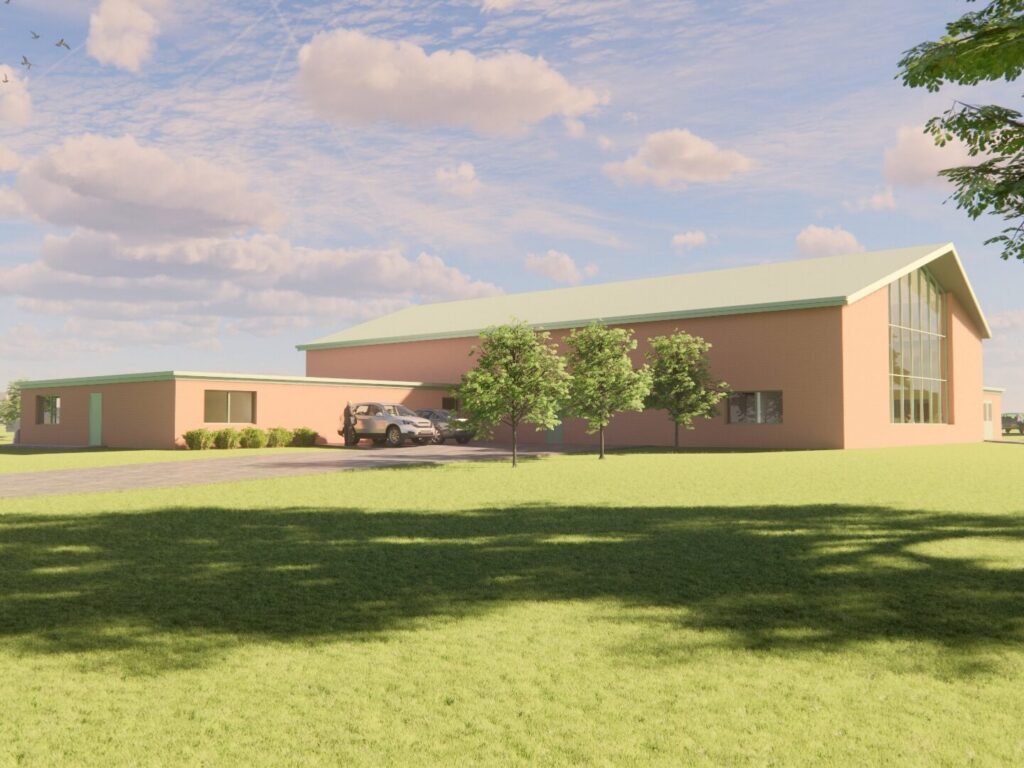
Established 15 years ago, the Free Medical Clinic has great community and donor support, but the limitations of its current rented facility prevented a much-needed expansion.
“We have a best-in-class team and best-in-class care. What we don’t have is a best-in-class facility. This grant will allow us to design that,” said Billy Edmonds, executive director of the clinic.
The clinic provides no-charge care to people who are at 200% of the federal poverty level. Providers had 15,000 patient encounters in the last year.
The newly redesigned building will allow the introduction of dental services, as well as significant expansion of existing services, Edmonds said. Mental health care capacity will increase by 500%, vision care capacity will increase by 400%, and primary medical care will increase by 120%.
“It’s a once-in-a-generation project,” he said.
Bringing Diabetes Care to Warren County
A $303,465 grant from the Center of Excellence will allow a thriving primary care clinic in McMinnville to build on success and increase capacity to serve the underserved diabetic population, said Whitney Blankenship, co-owner of Family Care Wellness, Inc.
In Warren County, the closest endocrinologist is an hour’s drive away, an insurmountable barrier for many patients. The grant will allow the clinic to hire a full-time dietician who recently attained her certification as a Diabetes Care and Education Specialist to provide consistent care for these patients.
Twenty percent of the clinic’s patients are diabetic, but the patients often don’t understand how diet and exercise affect the disease, Blankenship said. “What we struggle with in managing Type 2 diabetes is that they may be on max medication therapies, but then they tell us they had a Honey Bun for breakfast and McDonald’s with a Sun Drop for lunch,” she said. “This will allow us to manage much more complex diabetes patients and to help the patients gain better control and understanding of managing their disease.” The clinic will make the program self-supporting through reimbursement and value-based revenue.
Addressing Addiction in Appalachia and Trauma Care in West Tennessee
Two large grants on opposite sides of the state will allow local leaders to get a handle on addiction in Unicoi County and pediatric trauma care in rural West Tennessee.
For Lincoln Shelton, the $487,500 grant to Higher Ground Counseling PLLC in Unicoi County means the clinic will be able to establish an intensive outpatient treatment program for juveniles in that East Tennessee community.

While opioid overdose rates in Appalachia are twice the national average, access to treatment is below average. Young people who need more than weekly counseling often face a 45- to 90-minute commute, which many cannot manage. The juvenile outpatient treatment program at Higher Ground has the goal of treating 150 people over three years and becoming a self-sustaining program.
“I grew up in East Tennessee and was diagnosed as an alcoholic at the age of 14 when I was in the Department of Children’s Services custody,” said Shelton, owner and director of the counseling center. “As someone with lived experience and now a mental health counselor, I am convinced that this is a God-given opportunity for us at Higher Ground Counseling to help make a positive change for our community’s future.”
Providing Care Closer to Home
In West Tennessee, an implementation grant will support the establishment of the West Tennessee Pediatric Trauma Network by Le Bonheur Children’s Hospital to serve the 20 counties of West Tennessee outside Shelby County. That region has the highest child fatality rate of any rural area in the state at 80.9 deaths per 100,000 compared to the state average of 62.2 deaths per 100,000.
The West Tennessee network would equip school nurses, emergency professionals, and rural emergency departments with the knowledge, skills, and connections to deliver lifesaving, child-centered care in their own communities.
Treating these injuries locally, when possible, will be a significant help to the families, said Rudy Kink, MD, pediatric emergency physician and medical director of Pedi-Flite pediatric neonatal and pediatric transport. “We unfortunately see that many families may not have a car, may not have the money for gas to get to Le Bonheur,” he said.
Education is the first step in the two-year grant to Le Bonheur. “We really have to make sure everybody is comfortable taking care of kids of all shapes and sizes, from crib to college,” Dr. Kink said. “I know our rural medical providers would like to be able to manage some of these patients at home, as well.”
Assessing Underlying Causes of Poor Health
Two other planning grants will also serve communities on both sides of the state. The Tennessee Charitable Care Network will use its $48,797 planning grant to work with six community and faith-based clinics to evaluate the feasibility of an expansion of diabetes self-management education and support into rural clinics. This grant involves Bedford, Claiborne, Coffee, Dickson, Grundy, Sevier, and Roane counties.
A $97,500 grant will allow the Hardeman County Community Health Center in Bolivar to develop a standardized way to assess social drivers of care that affect patients’ health.
Medical Director Judith Tessema, MD, said she sees patients every day who face issues such as food insecurity or transportation problems that affect their overall health. “We really need to assess it better,” she said. “Patients don’t always disclose. They feel like it’s a burden.”
Serving Rural Communities
- The UT Health Sciences Nursing Mobile Health Unit is a fully equipped outpatient clinic led by advanced practice nurses serving Lake and Lauderdale counties. In fiscal year 2025, the mobile unit logged 504 patient encounters and 2,870 touchpoints at community events. The college received a four-year, $3.9 million grant from the Health Resources and Services Administration (HRSA) in 2022 to fund the unit.
- A second Nursing Mobile Health Unit, funded through a three-year, $3.6 million grant from the Rural Health Care Resiliency program, will go on the road this year to serve Hardeman, Haywood, and Dyer counties.
- The UT Chattanooga Mobile Medical Outreach Clinic (Mobile MOC), which launched in 2025, is a medically outfitted van that expands healthcare access for older adults and caregivers in rural Southeast Tennessee. James Haynes, MD, dean of the UT Health Sciences College of Medicine – Chattanooga, is the medical director for the Mobile MOC program.
- The College of Pharmacy’s Rural Health Certificate program enrolls students to prepare pharmacists for rural practice. This past year, 48 students were enrolled, with 11 graduating in May.
- The Tennessee Population Health Consortium is extending its innovative Neighborhood Health Hub Program into rural Hardin and Decatur counties, providing essential health screening and coaching for obesity, hypertension, and diabetes with the support of the Tennessee Department of Health and its Health Care Resiliency Program.